
Type: Cultural Landmark / Night View
Rating: ⭐⭐⭐⭐⭐ (Must-Visit)
Time Needed: 2-3 hours
Best Time: Evening 8:00-10:00 PM
Admission: Free
Address: 88 Jialing Riverside Road, Yuzhong District
Overview
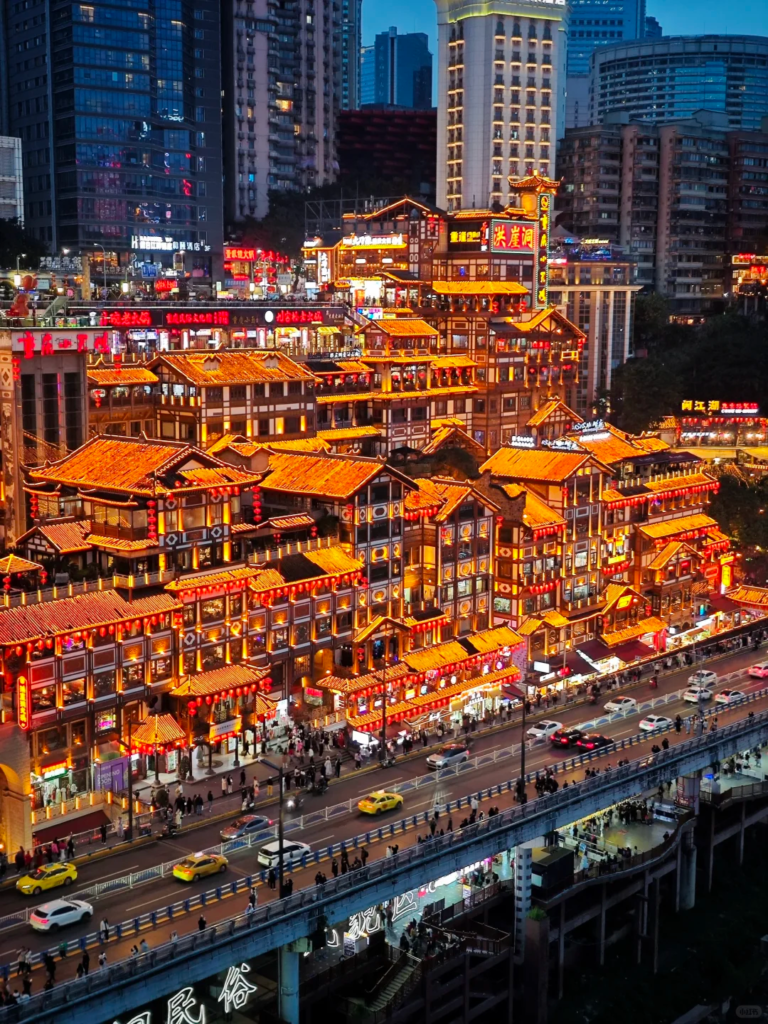
Hongya Cave (also known as Hongyadong) is Chongqing’s most photographed landmark. This 11-story traditional stilt house complex clings to a cliff above the Jialing River, lit up at night like something out of a cyberpunk movie. People compare it to the bathhouse from Spirited Away, and once you see it glowing gold against the night sky, you’ll understand why.
The building looks ancient, but it was actually reconstructed in 2006. What makes it special is how it captures the essence of old Chongqing – the stilt houses that used to line the riverbanks, the layered architecture that follows the mountain terrain, and the chaotic energy of a city built on cliffs.
History: From Ancient Fortress to Instagram Icon
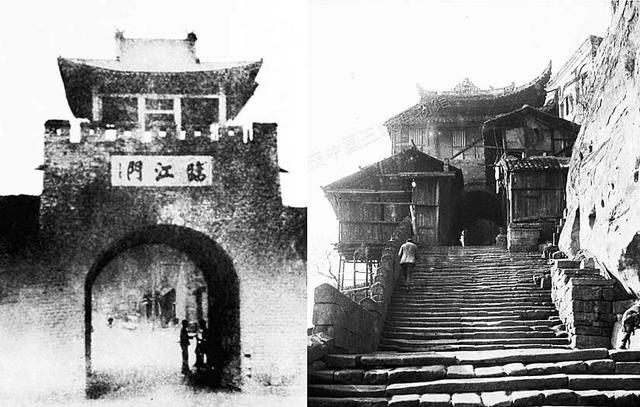
The Ancient Past (1046 BC – 1911 AD) The site where Hongya Cave stands has been strategically important for over 2,000 years. During the Ba Kingdom period (1046 BC – 256 BC), this cliff served as a natural fortress. Boats docked here to unload salt and silk from the Yangtze River trade routes. By the Ming Dynasty (1368-1644), the location became one of the 17 gates of ancient Chongqing’s city wall.
The gate was called Hongya Gate (洪崖门), named after the red cliffs (洪崖) that drop straight down to the river. Watchtowers stood where restaurants now glow.
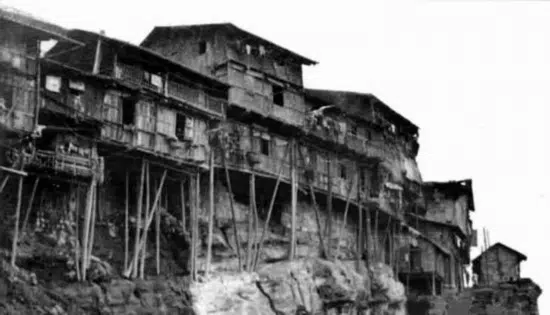
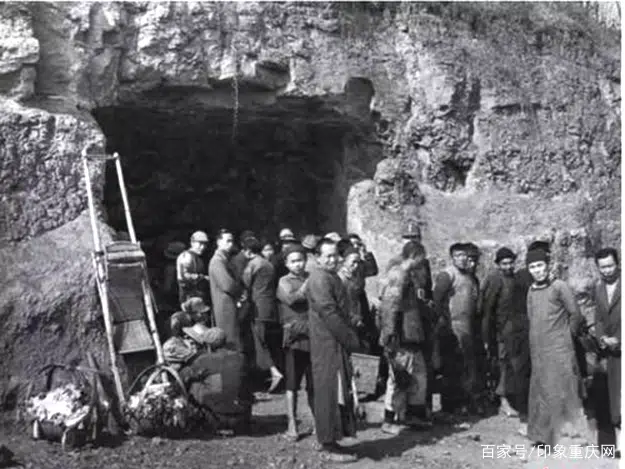
The Wartime Capital Era (1937-1945) When Japan invaded China’s eastern cities during World War II, Chongqing became the wartime capital of the Republic of China from 1937 to 1945. The government, foreign embassies, and millions of refugees fled here because the city’s mountainous terrain made it defensible. During this period, the Hongya Gate area was packed with wooden stilt houses where dock workers, refugees, and traders lived. The cliffside location was both a blessing and a curse – it provided natural shelter during Japanese bombing raids, but the cramped wooden structures were prone to fires.
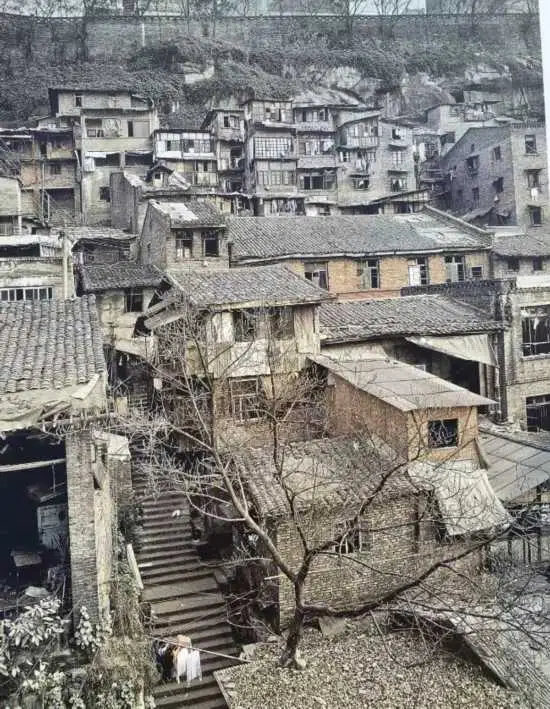
The Forgotten Decades & Reconstruction (1945-2006) After the war ended, Chongqing lost its capital status. By the 1990s, the area was a slum – crumbling stilt houses, no running water, open sewage. Instead of demolishing the site, developers spent 385 million yuan rebuilding it as a cultural landmark. They studied old photographs to recreate the traditional Bayu stilt house style (吊脚楼).
The Social Media Explosion (2018-Present) In 2018, a photo of Hongya Cave went viral on Chinese social media. Overnight, it became one of China’s most visited attractions. On weekends, you can barely move through the crowds.
Then vs Now: What Changed
Then (Pre-2006):
- Actual residential stilt houses where dock workers lived
- Wooden structures, no electricity in many buildings
- Narrow alleys, open sewage, fire hazards
- Authentic but crumbling (Locals avoided the area)
Now (2006-Present):
- Concrete and steel structure designed to look like wood
- 11 floors of shops, restaurants, and tea houses
- LED lighting system that costs thousands per night to run
- Clean, safe, and air-conditioned
What Stayed the Same:
- The cliff location and vertical architecture
- The view of the Jialing River
- The sense that you’re in a city that defies normal urban planning
What to See
1. The Night View (Essential) The building lights up at 8:00 PM. The best view is from across the river on Qianximen Bridge. Get there by 7:30 PM if you want a good spot – it gets crowded fast. The lighting is golden yellow, designed to look warm and inviting. On foggy nights, the whole structure glows through the mist like a lantern.
2. The 11 Floors
- Floors 1-3: Traditional food court (Great for photos, but food is often overpriced).
- Floors 4-5: Chongfeng 1980″ (Reunion 1980) Retro Block. This floor is an incredibly immersive time capsule of 1980s Chongqing. Complete with vintage trolleybuses, retro neon signs, old-school tea houses (Baba Tea), and nostalgic alleyways, it’s a paradise for cyberpunk and vintage photography.
- Floors 6-8: Shops selling souvenirs. “Dreaming of the Twelve Scenes of Bayu.” An interactive light and shadow art exhibition showcasing local history.
- Floors 9-10: Exotic restaurants and cliffside cafes with river views.
- Floor 11: City balcony and observation deck.
Note: The interesting part is that floors 1 and 11 are both ground level – that’s Chongqing’s mountain terrain for you.
3. The Architecture The building is designed to look like traditional Bayu stilt houses (吊脚楼). The design uses upturned eaves (飞檐), red lanterns, wooden railings, and layered roofs that follow the cliff. It’s theatrical, but it’s based on real architectural traditions.
Practical Information
Getting There:
- Metro: Line 1 or 6 to Xiaoshizi Station (Exit 2, walk 10 minutes following signs)
- Walking: 10-15 minutes along the riverside from Jiefangbei
- Taxi/Didi: Just say “Hongya Cave” – drivers know it
The Ultimate Photo Route: Cross the Bridge to the Grand Theatre
Don’t just stay inside the building. To get the “Masterpiece” shot you see on Instagram, follow this route:
- Start at Level 11: This is the top floor of Hongya Cave (which is also ground level at the street).
- Walk the Qianximen Bridge: Walk onto the pedestrian path of the bridge right next to the cave. As you walk across, look back—this is the best angle to see the full golden facade of the building.
- Arrive at the Grand Theatre: After a 15-minute walk, you will reach the Chongqing Grand Theatre on the Jiangbeizui side.
- Jiangbeizui River Beach Park: Head down to the riverbank. During the low water season, you can walk onto the rocky beach for a stunning panoramic view of the bridge and Hongya Cave reflecting on the Jialing River.
Avoiding Crowds:
- Weekdays are less crowded than weekends
- Mornings (9-11 AM) are nearly empty
- Avoid national holidays (October 1-7, Chinese New Year)
What to Skip:
- Don’t eat inside (tourist prices, mediocre food)
- Don’t buy souvenirs here (same stuff costs half as much elsewhere)
- Don’t drive (parking is impossible)
The Verdict
Hongya Cave is touristy, crowded, and not historically authentic. But it’s also beautiful, photogenic, and captures something true about Chongqing’s identity as a vertical city built on cliffs. Go for the view, not the shopping. Go at night, not during the day. And go knowing that what you’re seeing is a reconstruction – but a reconstruction that tells you something real about how this city sees itself.
Ready to see Chongqing’s cyberpunk skyline come alive?
Hongya Cave is just the beginning. Join our Private Night View Walking Tour: Chongqing Skyline to discover the most breathtaking, crowd-free photography spots, hidden cliffside bars, and the true magic of this 8D mountain city after dark.