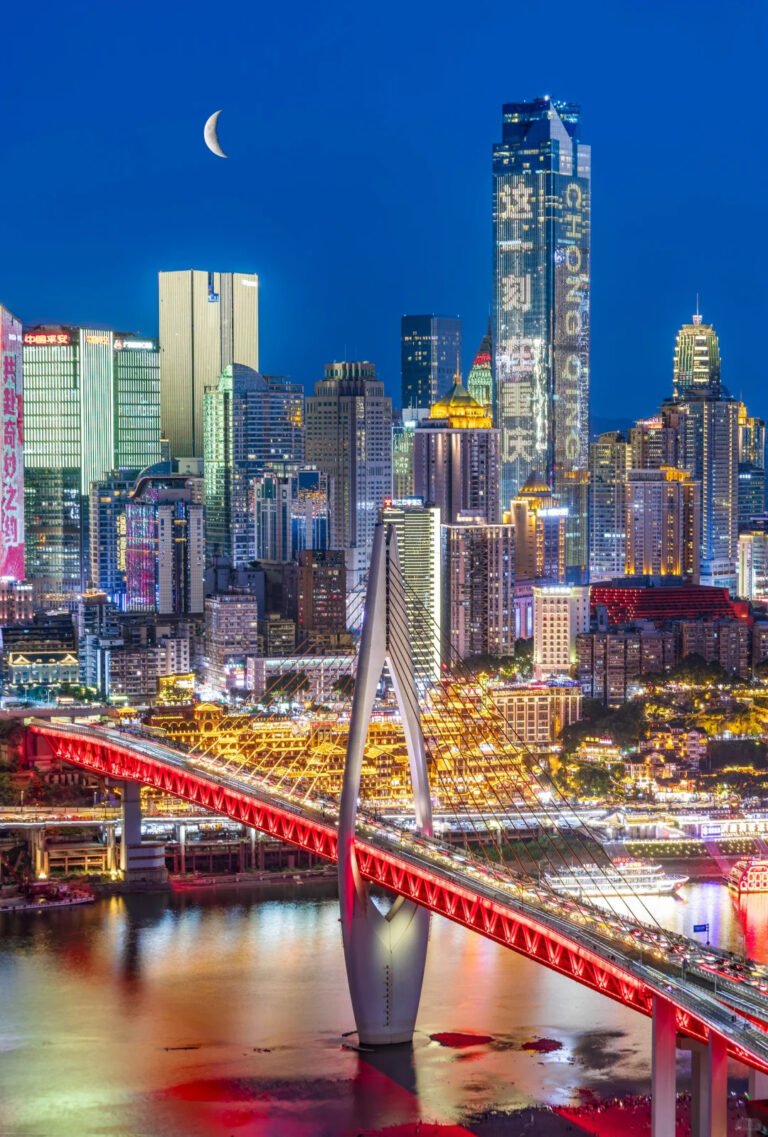

The famous images are real: trains entering buildings, bridges suspended between towers and a riverfront glowing after dark. The surprise is how much more human the city feels once you step away from the postcard.
For most first-time visitors, the best things to do in Chongqing are to explore the layered city center around Jiefangbei, see Hongya Cave after dark, watch the Line 2 monorail at Liziba, walk through Shibati and Longmenhao, eat hotpot and xiaomian, and spend one evening looking back at the skyline from the river or south bank. Two days gives the city room to breathe. With three or four days, add Wulong Karst for dramatic nature or the Dazu Rock Carvings for history and art.
Chongqing is not difficult because it lacks transport. It is difficult because the map rarely explains the vertical distance between two points. Hills, bridges, elevators, one-way roads and different street levels make good route planning more valuable here than in most Chinese cities.
Planning your first Chongqing trip? Ask EzGoChina which route fits your time
In This Guide
- Why Chongqing feels unlike anywhere else in China
- The 21 experiences that make the city make sense
- What to eat and how to handle Chongqing spice
- Which night experiences are worth your time
- Wulong or Dazu: choosing the right day trip
- One-, two-, three- and four-day Chongqing itineraries
- Where to stay, how to get around and when a local guide helps
- Frequently asked questions for first-time visitors
Most Cities Reveal Themselves From a Viewpoint. Chongqing Reveals Itself While You Are Moving.
You begin on what appears to be an ordinary downtown street. Five minutes later, you have crossed a building lobby, taken an elevator, walked onto a plaza several floors above the traffic and discovered that the road you were looking for is now below you. A monorail slides into a residential tower. A bridge carries cars past windows that feel close enough to touch. Somewhere down a staircase, steam rises from a noodle shop you would never have seen from the main road.
This is why Chongqing photographs so well and confuses so many first-time visitors. The central city sits at the meeting of the Yangtze and Jialing rivers, on terrain shaped by steep hills and large changes in elevation. Streets, buildings and transport systems have grown around that geography instead of flattening it. Travelers call it an “8D city”, but the phrase is useful only if it describes the feeling of moving through several versions of street level in the same afternoon.
The mistake is trying to race between isolated attractions. Chongqing makes more sense as a sequence: ride the monorail, walk a stairway, eat nearby, cross the river, look back and stay out until the lights come on. The spaces between the landmarks are often the part you remember.
Read the City in Layers
1. Hongya Cave After Dark: See the View, Not Only the Building
Hongya Cave is the image most travelers recognize before they arrive: gold-lit roofs stacked above the Jialing River, with Qiansimen Bridge and the modern skyline around them. The current complex is a modern tourism development inspired by Chongqing’s traditional stilt-house architecture, built into a steep riverbank where an old city gate once stood.
The important decision is where to spend your time. Walking inside helps you understand the elevators, terraces and different street levels, but the building is also crowded and commercial. Its strongest moment comes when you step away and see the whole slope at once. Start with an outside view, then move closer only if the crowd and your energy allow it. Do not spend the entire evening waiting for one famous photo angle.
Best for: first-night atmosphere, skyline photography and understanding Chongqing’s vertical riverfront.
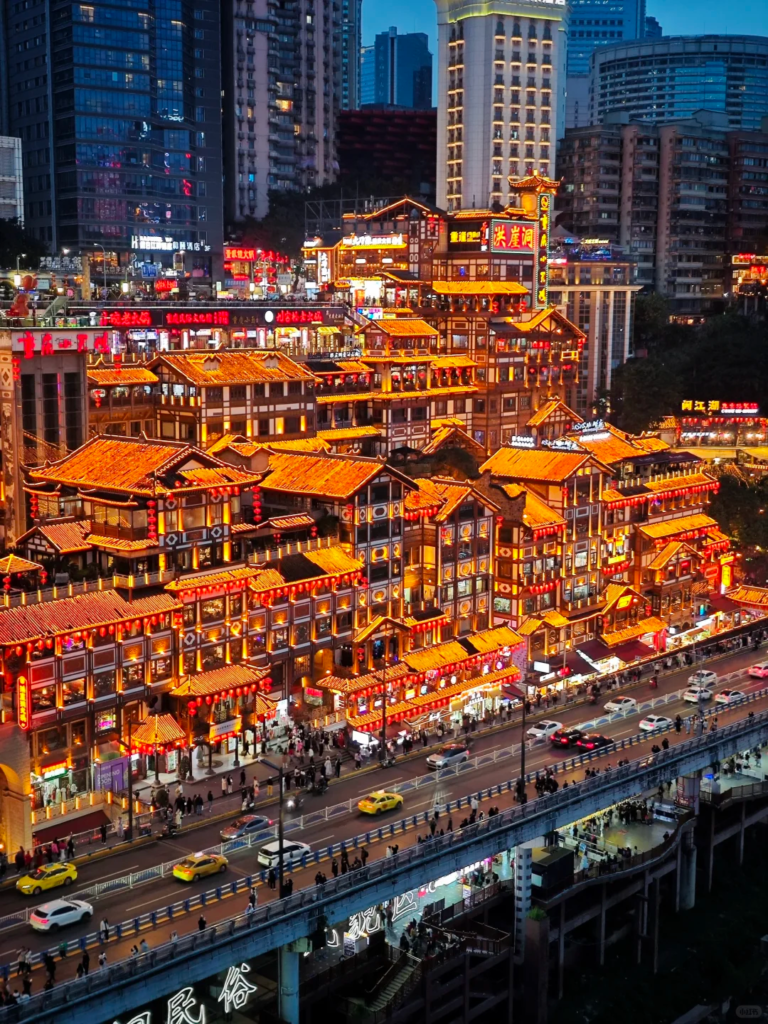
Hongya Cave after dark. The wide riverfront context matters more than the shopping interior. Image credit in appendix: Lianguanlun, CC BY 4.0.
Want the city explained while the skyline changes around you? See the Private Chongqing Cyberpunk Night Tour
2. Liziba: The Moment Chongqing Looks Impossible
At Liziba, Line 2 does not merely pass beside a building. The station was designed together with a commercial and residential structure, occupying upper floors while homes and city life continue around it. From the public viewing area below, the green monorail appears, enters the building and emerges again a few seconds later.
The visit is short, but it explains Chongqing better than a long paragraph about infrastructure. Mountains and limited flat land have forced the city to solve movement vertically. Watch more than one train. The first is the photograph; the second lets you notice commuters, residents, visitors and the everyday choreography around a scene that looks extraordinary from the outside.
Practical note for 2026: the station is undergoing phased upgrades. Follow current signs because some station areas or exits may be temporarily redirected during construction.
Liziba Station: a fast stop that explains the city’s use of vertical space. Image credit in appendix: N509FZ, CC BY-SA 4.0.
3. Ride the Yangtze River Cableway Once
The Yangtze River Cableway is no longer essential transport for most residents, but it remains one of the quickest ways to read the city from the air. The ride is brief. That is part of its value: in a few minutes, the river, bridge traffic, riverbanks and different building levels align into a single view.
Pair the crossing with nearby places rather than treating it as a standalone expedition. A useful route connects Xiaoshizi or Jiefangbei on the Yuzhong side with Longmenhao and the south bank. Queues and operations can change, so a flexible plan matters more than a fixed minute-by-minute promise.
Best for: first-time visitors, families and anyone who wants the city’s geography to become visible.
4. Use Jiefangbei as Your Orientation Point
Jiefangbei is not Chongqing’s hidden secret, and that is exactly why it works. The monument and surrounding commercial streets provide a clear center in a city that can otherwise feel spatially slippery. Many hotels, restaurants and transport connections are close, and Hongya Cave, Luohan Temple, Xiaoshizi and Chaotianmen can all be linked from here.
Come once in daylight to understand the area, then pass through again after dark when the surrounding screens, shops and street life turn it into a different place. Stay nearby on a first visit if convenience matters more than boutique atmosphere.
5. Step Into Luohan Temple for a Change of Scale
The most useful thing about Luohan Temple is the contrast. One moment you are surrounded by traffic, glass and commercial towers; the next, incense smoke and carved figures slow the pace. It is not a vast monastic escape. It is a small cultural interruption inside one of the city’s busiest districts.
Use it as part of a half-day downtown sequence rather than crossing the city only for the temple. Jiefangbei, Luohan Temple, Chaotianmen and a riverfront walk naturally belong together.
6. Walk Shibati Instead of Treating It as a Photo Stop
Shibati, the Eighteen Steps, follows the old logic of moving between Chongqing’s upper and lower city. The area has been heavily renovated, so it should not be presented as untouched old China. What remains valuable is the physical experience: stairs, slopes, walls, viewpoints and the feeling of descending through different layers of the mountain city.
The best visit is slow. Pause for tea or a snack, look down side lanes and notice how old circulation patterns survive inside a polished visitor district. Shibati works because it connects history to the body: you understand the city by climbing it.
7. Cross to Longmenhao and Look Back
Many first-time itineraries spend too long on the Yuzhong peninsula. Longmenhao gives the city room to breathe. Heritage buildings, hillside paths and river views create a calmer experience, and the angle back toward Yuzhong makes the scale of the skyline easier to understand.
Come in the late afternoon if you want the light to change while you walk. This is also a natural partner for the cableway or a south-bank night-view route. The point is not one exact “secret viewpoint”; it is the shift from standing inside the skyline to seeing the city as a whole.

8. See Chaotianmen Where the Rivers and the Modern City Meet
Chaotianmen sits at the meeting of the Yangtze and Jialing rivers. Around it, Raffles City has become a defining piece of Chongqing’s contemporary skyline. This is one of the best places to connect the city’s river geography with its modern ambitions.
Do not expect the confluence to look dramatically different every day; water color depends on season and conditions. Instead, use the area to understand direction: which river is which, where the peninsula narrows and how the bridges and banks frame central Chongqing.
9. Visit Ciqikou With Honest Expectations
Ciqikou has a long history and remains one of Chongqing’s best-known old-town areas. It is also busy, commercial and designed for visitors. Both things can be true. Go for street atmosphere, snacks, casual browsing and a change from the high-rise center—not for a fantasy of an untouched village.
Visit earlier if you dislike crowds, and walk beyond the most obvious entrance streets before deciding what you think of it. Travelers with very limited time may prefer Shibati or Longmenhao because they fit more naturally into central routes.

10. Treat Transport and Walking as Part of the Sightseeing
Chongqing punishes the expectation that the shortest line on a map is the easiest route. The useful path may involve a monorail, escalator, pedestrian bridge, underpass, elevator and staircase. That is not wasted time. It is the city explaining itself.
Build fewer stops into each half-day and leave space for wrong turns. Wear shoes with grip. Save screenshots or Chinese place names before leaving Wi-Fi. When a route suddenly opens onto a river or drops you several floors lower than expected, stop and look back. Those moments are often better than the planned attraction.
Eat the City, Not Just One Famous Dish
11. Sit Down for a Proper Chongqing Hotpot
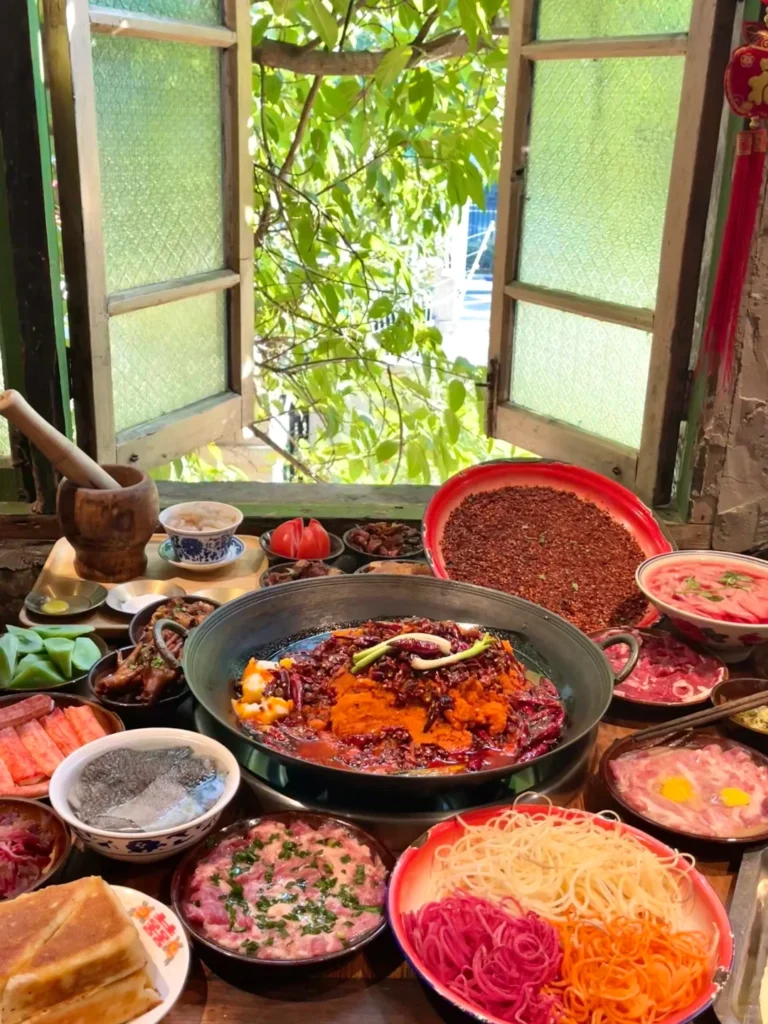
Before the first bite, Chongqing hotpot announces itself. Red oil moves across the surface, peppercorn catches in the steam and the table fills slowly with plates that make little sense until someone shows you what cooks quickly and what needs time.
Hotpot is not simply a test of spice tolerance. It is a social meal with its own pace. Order a divided pot if necessary, ask for a mild base and let the table build gradually. The most memorable restaurant is not always the most decorated one. Look for a room full of local conversations, fast-moving staff and a menu that can be adjusted to your comfort level.
If you have allergies, dietary restrictions or no Chinese payment apps, arrange help in advance. Chongqing can adapt, but clear communication matters.
12. Eat Xiaomian Before the City Fully Wakes Up
A bowl of Chongqing xiaomian can be more revealing than a formal dinner. Noodles arrive quickly, coated in oil, vinegar, sesame, preserved vegetables, chili and peppercorn. Around you, office workers and residents eat standing up or on small stools before moving into the day.
Ask for less chili if needed, but do not remove every seasoning unless you must. The balance matters. A morning noodle stop also gives you a quieter picture of the city before the major attractions fill.
13. Follow a Food Neighborhood, Not a Viral Checklist
The challenge is not finding food. Chongqing has food everywhere. The challenge is knowing where locals actually eat, what to order and whether a famous stall is worth crossing the city for.
A better strategy is to let one neighborhood feed you for an evening. Begin with noodles or dumplings, move through a small family restaurant, cool down with ice jelly and finish with tea or beer. This creates a sense of place instead of a collection of disconnected bites.
Want someone to handle the ordering, spice level and payments while you focus on eating? Explore the Chongqing Street Food Safari
14. Visit a Wet Market or Cook With a Local Host
A wet market shows what restaurant menus hide: the vegetables, fermented ingredients, cuts of meat, chilies and peppercorn that structure everyday cooking. The pace is practical rather than theatrical. Vendors are working; families are shopping; nothing exists only for photographs.
A market-to-table experience is especially useful for travelers who want to understand why Chongqing food tastes the way it does. It turns unfamiliar ingredients into techniques you can remember, and it creates a more personal connection than another generic “food street”.
15. Give Tea, Cards and Conversation Some Time
Chongqing is loud, but it is not only loud. Old teahouses and neighborhood social spaces reveal another rhythm: cards striking the table, enamel cups, slow refills and people who are not performing local culture for visitors. They are simply spending the afternoon.
Choose a teahouse for atmosphere rather than polished service. Go with patience, keep your camera respectful and let the room settle before photographing anyone. This kind of stop works best between larger attractions, when the city has started to feel overwhelming.
Stay Out After Dark and Use the Rivers
16. Build One Good Night-View Route
Chongqing after dark is not one attraction. It is a relationship between bridges, windows, fog, reflections and the steep riverbanks. Trying to collect every viewpoint usually creates traffic, queues and a camera roll full of similar images.
Choose one coherent sequence. Start inside the city, cross or descend toward the river, then finish from a viewpoint that lets you look back. The best route changes with weather, construction, crowd levels and your hotel location. This is why local knowledge matters more than a permanent “top five photo spots” list.
17. Take a Two-Rivers Cruise if You Want the Skyline to Move
A river cruise gives you a moving view of the city rather than a fixed platform. Bridges arrive and disappear, the banks change scale and buildings that seemed close together separate into distinct neighborhoods.
Cruises can be crowded and the pier system can be confusing, so check the exact boarding location, sailing time and ticket category. The cruise is most worthwhile when combined with a short guided walk before boarding, not when it replaces the entire evening.
18. Make Room for One History Stop
The cyberpunk label is useful, but incomplete. Chongqing was an important wartime capital and contains layers of modern Chinese history that explain its identity beyond hotpot and neon. A museum, wartime site, old embassy area or history walk can change the way you read the city.
Choose one history stop that fits your interests rather than adding several museums to a short itinerary. The goal is context: why the city grew, how its river position mattered and why certain neighborhoods carry memories that the skyline can hide.
Leave the City for One Serious Day Trip
19. Choose Wulong for Landscape and Physical Scale
Wulong is the classic nature escape from central Chongqing. The Three Natural Bridges and surrounding karst landscapes replace towers and bridges with sinkholes, cliffs, stone arches and deep green valleys. It is a long day, and the experience involves scenic-area transfers and significant walking.
Choose Wulong if you want the day to feel physically large and you are comfortable spending several hours on the road. Do not try to force every Wulong attraction into one itinerary. For a one-day trip, two major scenic areas are usually more rewarding than a rushed collection of three or four.
Wulong: the nature choice when you want cliffs, karst and a full-day escape from the city. Image credit in appendix: Gaius Cornelius, CC BY-SA 3.0.
20. Choose Dazu for Stone, Stories and a Quieter Day
The Dazu Rock Carvings are the strongest cultural day trip from Chongqing for travelers interested in art, history and ordinary human stories. At Baodingshan, Buddhist teaching appears through parents and children, herdsmen and oxen, fear, compassion and the effort to control the mind.
Dazu is less physically demanding than Wulong, but it rewards interpretation. Without context, one panel can blur into the next. With a knowledgeable guide, small gestures begin to connect into a larger argument about family, duty, desire and consequence.
Choose Dazu when you want a slower day that stays with you intellectually rather than a major outdoor adventure.
Still deciding between Chongqing’s two major day trips? Read the complete Dazu Rock Carvings guide
21. Use Chongqing as the Gateway to the Three Gorges
For travelers with more time, Chongqing is one of the main starting points for a Yangtze Three Gorges cruise. This is not a city excursion; it is a separate multi-day journey with cabin categories, shore excursions and changing embarkation arrangements.
If a cruise is part of your trip, keep at least one full day in Chongqing before boarding. Piers and transfer times can change, and arriving on the same day creates unnecessary risk. The contrast works well: vertical megacity first, long river landscapes afterward.
How Many Days Do You Need in Chongqing?
Two days is a strong first visit. One day is possible if you stay central and accept that you are sampling rather than understanding the city. Three days allows one major day trip; four days creates enough breathing room for food, neighborhoods and flexible weather planning.
| Time | Recommended focus | Who it suits |
| 1 day | Jiefangbei, Liziba, one old-city walk, dinner and one night-view route | Layovers and very short first visits |
| 2 days | Core city sights, food, Shibati or Longmenhao, and a better-paced evening | Best general first-trip rhythm |
| 3 days | Two city days plus Wulong or Dazu | Travelers who want one major excursion |
| 4+ days | City, food, night views, neighborhoods and one or two surrounding destinations | Slow travelers, photographers and repeat visitors |
Suggested First-Time Itineraries
One Day: The Essential Vertical City
Begin around Jiefangbei and Luohan Temple, continue to Liziba, walk Shibati or another central mountain route, eat hotpot or local dishes, then finish with Hongya Cave and one good river or south-bank viewpoint. Keep the route compact and do not add Ciqikou unless it is a priority.
Two Days: City Layers and Local Flavor
Day 1: Jiefangbei, Luohan Temple, Chaotianmen, Hongya Cave and night views. Day 2: Liziba, Shibati or Longmenhao, a food neighborhood or market experience, then a slower evening. This is the best balance for most first-time visitors.
Three Days: Add Wulong or Dazu
Use two days for the city, then choose one serious excursion. Pick Wulong for nature and walking. Pick Dazu for culture and interpretation. Do not combine them in one day.
Four Days: Stop Treating Chongqing as a Checklist
Add a free half-day, a deeper neighborhood, a second food experience or a river cruise. If the weather changes, move the viewpoints and outdoor walks rather than forcing the original order.
Where Should First-Time Visitors Stay?
Jiefangbei and Xiaoshizi are the easiest bases for a first visit because they connect naturally to Hongya Cave, Luohan Temple, Chaotianmen, the cableway and central metro lines. The area is busy, but it saves time and reduces decision fatigue.
The south bank around Longmenhao or Nanbin Road offers better skyline views and a calmer evening atmosphere, but it is less convenient if most of your daytime plan is in Yuzhong. Jiangbeizui can work for modern hotels and river views. Whichever area you choose, prioritize a well-connected metro location over a hotel that looks close on the map but sits awkwardly on another level or hillside.
How to Get Around Chongqing Without Losing Half the Day
- Use the metro for major cross-city movement, then walk shorter neighborhood sequences.
- Save Chinese place names and screenshots; foreign map apps may not show entrances or elevation clearly.
- Allow more time than the straight-line distance suggests.
- Use taxis for awkward hillside transfers, but expect traffic around major evening attractions.
- Wear comfortable shoes and avoid planning several stair-heavy districts back to back.
- Check current notices for Liziba upgrades, cableway operations, river-cruise piers and temporary route changes.
When a Local Guide Helps Most
You can travel around Chongqing independently. The metro is extensive, taxis are available and translation apps solve many basic interactions. A guide becomes most valuable when your time is limited, your group has different walking abilities, you care about food ordering or you want the city to become more than a collection of photographs.
For English- and Spanish-speaking travelers, the benefit is not only translation. It is pacing: knowing which side of the river to visit first, which entrance avoids unnecessary climbing, when to reverse a night route and how to connect famous views with neighborhoods that explain them.
Tell us your dates, group size, language, hotel and what you have already seen. EzGoChina can suggest a private route instead of forcing a fixed checklist. back, and stay out until the lights come on. That is how the city starts to feel whole.
Is Chongqing worth visit?
Yes. Chongqing is one of China’s most distinctive urban experiences because mountains, two major rivers, layered transport, hotpot culture and an exceptional night skyline all shape the way the city feels.
How many days do you need in Chongqing?
Give Chongqing two full days for a first visit. One compact day can cover Jiefangbei, one old-city walk, Liziba or the cableway, dinner and a night-view route, but only if your arrival time and hotel location keep the route efficient. Three days is the point at which a full-day trip to Wulong or Dazu becomes sensible. A train arriving at 3:00 p.m. is not a full sightseeing day, so count usable hours rather than hotel nights.
What should I not miss in Chongqing?
For a first visit, do not miss Hongya Cave after dark, Liziba Station, a walk through the mountain-city streets, a proper local meal and one river or south-bank skyline view.
What are the best things to do in Chongqing at night?
See Hongya Cave from outside, walk around Jiefangbei, cross or view the rivers, photograph the bridges and use one well-planned south-bank or river route rather than chasing every viewpoint.
Is Hongya Cave worth visiting?
Yes, especially after dark, but the outside view is more important than spending a long time inside the commercial complex. Expect crowds and keep the route flexible.
How do I visit Liziba Station?
Take Chongqing Rail Transit Line 2 or go to the public viewing area below the station. In 2026, phased station upgrades may redirect some entrances, so follow current signs.
Where should first-time visitors stay in Chongqing?
Jiefangbei or Xiaoshizi is the easiest base for most first-time visitors. The south bank suits travelers who prefer river views and a calmer evening atmosphere.
How do you get around Chongqing?
Use the metro for longer distances, walk connected neighborhoods and use taxis for difficult hillside transfers. Allow extra time because map distance does not show elevation, bridges or entrances.
What food should I try in Chongqing?
Try hotpot, xiaomian noodles, skewers, tofu dishes, cold dishes and small family-run restaurants. Ask for a mild or divided pot if you are sensitive to chili and peppercorn.
Can vegetarians or travelers with allergies eat well in Chongqing?
Yes, but communication matters. Explain restrictions before ordering and use a guide or translated written note for serious allergies. Hotpot cross-contamination should be discussed clearly.
What is the most efficient first-day route in Chongqing?
Start in central Yuzhong, not with a cross-city checklist. A practical sequence is Jiefangbei and Luohan Temple, followed by Chaotianmen or Shibati, dinner, and an exterior view of Hongya Cave after dark. Liziba can replace one downtown stop if the monorail is a priority. Trying to combine Ciqikou, Liziba, the cableway, Hongya Cave, a river cruise and several viewpoints in one day usually means more time in traffic and queues than in the city itself.
When should I visit Hongya Cave, and where is the best view?
Visit Hongya Cave after dark, but see the exterior before spending time inside. The useful viewpoints are along the riverfront, from Qiansimen Bridge when pedestrian access allows, or from the opposite bank. Illumination times, bridge access and crowd controls can change, so avoid building the entire evening around one fixed photo position. On the Private Chongqing Cyberpunk Night Tour, the guide can reverse the route when traffic, fog or bridge access makes the original sequence inefficient.
How much walking and stair climbing should I expect in Chongqing?
Expect slopes, stairs, pedestrian bridges and long station transfers even on a well-planned city day. A private vehicle can reduce cross-city transfers, but it cannot remove the walking inside Shibati, Longmenhao, Hongya Cave or many hillside neighborhoods. Tell us the oldest and youngest guest, whether anyone has knee problems, and how long the group can walk comfortably without a break. We can reduce stair-heavy sections and change the pace, but the standard mountain-city route is not fully wheelchair accessible.
Can older travelers or families with children enjoy Chongqing comfortably?
Yes, if the route is designed around the group rather than copied from a social-media checklist. Families often enjoy the monorail, cableway, rivers and food, while older travelers usually benefit from fewer stair districts, more taxi transfers and an earlier night-view finish. Strollers and serious mobility limitations require advance discussion because many attractive routes include uneven surfaces or steps. Send ages and mobility needs before booking so we can recommend the right product instead of selling a poor-fit itinerary.
Which EzGoChina tour is right for my trip?
Choose by the problem you want the tour to solve. For skyline views, photography and Chongqing’s evening atmosphere, choose the Private Chongqing Cyberpunk Night Tour. For menus, spice levels, markets and small local restaurants, choose the Chongqing Street Food Safari. For a full first-day orientation, different walking needs or a mix of neighborhoods and major sights, ask for a private custom route. For nature, choose Wulong; for history and Buddhist art, choose Dazu.
Is the Two Rivers Cruise worth it, or is a night walking tour better?
Choose the cruise for a moving panorama and less route planning; choose a night walking tour for explanation, flexible photo stops and a closer view of the city’s levels. The cruise can be crowded, and the exact pier and ticket category matter. A walking route involves more hills and stairs but gives the guide room to respond to fog, traffic and lighting conditions. First-time visitors who want to understand Chongqing usually gain more from the guided route; travelers who mainly want the skyline from the water may prefer the cruise.
Should I choose Wulong or the Dazu Rock Carvings for a day trip?
Choose Wulong for karst scenery, large landscapes and a more physical day; choose Dazu for sculpture, history and a quieter interpretation-led visit. Wulong involves more scenic-area transfers and walking. Dazu is usually less physically demanding, but it becomes much more rewarding when someone explains the family scenes, Buddhist ideas and visual sequence at Baodingshan. Read the complete Dazu Rock Carvings guide, or send us your interests and walking level if the choice is still unclear.
What happens if rain, fog, crowds or closures affect the route?
A private Chongqing route should be able to change order without losing its purpose. Fog may improve the atmosphere but hide a distant viewpoint; rain can make old steps slippery; traffic or temporary controls can affect Hongya Cave, the cableway, cruise piers or Liziba access. EzGoChina confirms the core plan before the tour, then adjusts timing, direction or individual stops when real conditions require it. We do not promise every stop regardless of safety, access or guest comfort.