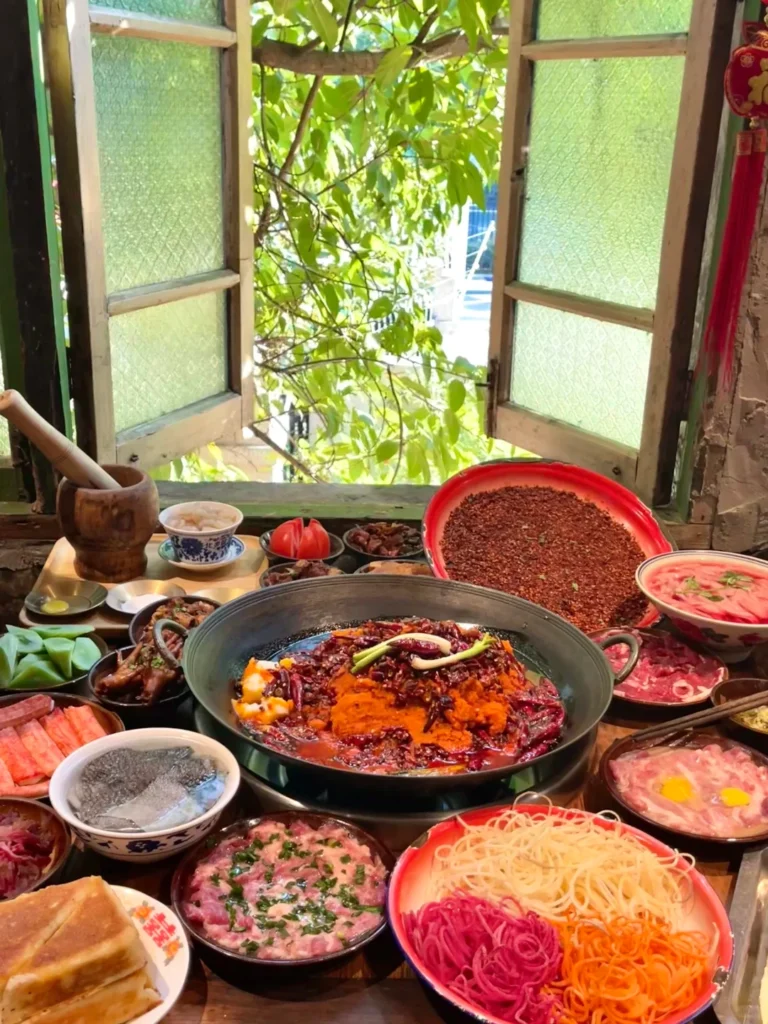
Nobody really prepares you for your first Chongqing hotpot.
People tell you it is spicy. That part is true. But “spicy” is a lazy word for what happens next.
The pot arrives at your table looking less like dinner and more like a geological event. A deep red lake of chili oil rolls and bubbles in front of you. Dried chilies float on the surface. Sichuan peppercorns cling to the edge of the pot. The steam smells smoky, garlicky, beefy, and slightly dangerous.
You take one bite. At first, it burns. Fine. You expected that.
Then your lips start to buzz. Your tongue goes a little numb. The feeling spreads slowly to your gums and the inside of your cheeks, as if someone turned on a tiny electrical current inside your mouth.
This is not your imagination. This is mala — 麻辣. Ma means numbing. La means spicy. And in Chongqing, mala is not just a flavor. It is a civic identity.
The first time can be messy. You may sweat. You may laugh at the wrong moment. You may lose a piece of beef somewhere in the red oil and never see it again. You may say, “I’m fine,” while clearly not being fine.
But if you know what to order, what to avoid, and how locals actually eat it, Chongqing hotpot can become one of the best meals of your trip. This guide is here to get you through your first pot without panic.
💡 The Short Version
For your first Chongqing hotpot, order a split pot — 鸳鸯锅, yuān yāng guō with one spicy side and one mild side.
Choose mild spice — 微辣, wēi là. Start with a few classics: beef tripe, tender beef, potato, lotus root, tofu, winter melon, lettuce, and wide sweet potato noodles.
Make your dipping sauce with sesame oil, garlic, cilantro, and green onion. Drink sour plum juice or sweet soy milk.
Do not order extra spicy because someone at the table said, “Come on, you can handle it.” That person is not your friend.
What Is Chongqing Hotpot?
Chongqing hotpot is a shared meal built around a boiling pot in the middle of the table.
In the classic version, the broth is rich, red, oily, and fragrant. It is usually made with dried chilies, Sichuan peppercorns, garlic, ginger, fermented sauces, spices, and often beef tallow. You order raw ingredients, cook them yourself in the pot, dip them into your own sauce bowl, and eat them while they are still hot.
That is the simple explanation. The real experience is louder.
A hotpot restaurant in Chongqing is not a quiet, candlelit dinner. It is steam, shouting, chopsticks, laughter, sizzling oil, plastic stools, sauce bowls, phone photos, and someone at the next table confidently fishing out duck intestine like they have been training for this moment all their life.
The menu can be intimidating if you do not read Chinese. Some of the best items sound alarming in English:
- Beef tripe.
- Duck intestine.
- Beef aorta.
- Duck blood.
- Pig brain.
To a first-time visitor, this can feel like a dare. To locals, it is just dinner.
The key is not to order randomly. The key is to understand what each item is for. Hotpot is not only about taste. It is also about texture. Crunchy. Slippery. Soft. Chewy. Fatty. Fresh. Numbing. Cooling. Absorbing. Once you understand that, the menu starts to make sense.
Why Chongqing Hotpot Feels Different
If you have had hotpot in other parts of China, Chongqing may still surprise you. Chengdu hotpot can be fragrant, round, and balanced. Chongqing hotpot is more direct. It has less interest in being polite.
It is heavier. Oilier. Louder. More muscular.
That makes sense when you look at the city. Chongqing is built on hills, rivers, stairs, bridges, tunnels, and impossible layers of roads. It is a city where you can enter a building on the first floor, walk out the back, and somehow be on the eleventh floor. It is humid, vertical, dramatic, and a little chaotic.
The food matches the place. Chongqing hotpot does not whisper. It leans across the table and says, “Are you ready?”
Step 1: Choose the Right Pot
When you sit down, the server will probably ask what kind of pot you want. You may not understand the whole sentence, but you only need to recognize a few words:
- 红锅 — hóng guō: A full spicy red-oil pot. Beautiful. Intense. Not ideal for your first time unless you already love serious spice.
- 鸳鸯锅 — yuān yāng guō: A split pot: one spicy side, one mild side. This is the best choice for most foreign travelers.
- 清汤锅 / 菌汤锅 / 番茄锅: Mild broths (clear, mushroom, or tomato). Safe, gentle, and useful for sensitive stomachs or vegetarians.
Order the split pot. Say: 鸳鸯锅。微辣。 (Yuān yāng guō. Wēi là.) -> Split pot. Mild spice.
This gives you one side for the real Chongqing flavor and one side where your mouth can go to therapy. There is no shame in this. Many locals order split pots too. A full red pot looks impressive in photos. A split pot lets you actually enjoy dinner.
Step 2: Do Not Be a Hero With Spice
Chongqing spice levels are not calibrated for tourists. When a restaurant says “mild,” it does not mean mild like a supermarket salsa in Ohio. It means mild for Chongqing.
That still has chili. That still has Sichuan peppercorn. That still has personality.
- 微辣 (wēi là): Mild. Start here.
- 中辣 (zhōng là): Medium. This is already serious.
- 特辣 (tè là): Extra spicy. Save this for your third life.
For your first meal, choose 微辣. You can always add more chili later. You cannot easily remove spice from a pot of boiling red oil while pretending not to regret your choices.
Step 3: What to Order First
A good first order should be balanced. You want a few Chongqing classics, a few familiar items, and maybe one or two things that make you feel brave without making you question your entire life. For two people, start with 8 to 10 dishes. Do not order the whole menu at once.
The Classics Worth Trying
- 毛肚 (máo dǔ) — Beef tripe: This is one of the signature Chongqing hotpot items. In English, “beef tripe” may not sound exciting. In the pot, it makes sense. It is thin, textured, and meant to be cooked very quickly. Cook it for about 7 or 8 seconds. Not seven minutes. Seven seconds.
- 鸭肠 (yā cháng) — Duck intestine: This one scares many visitors until they try it. It is thin, delicate, and crunchy when cooked properly. Like tripe, it only needs a short time in the pot.
- 嫩牛肉 (nèn niú ròu) — Tender beef: A safe, delicious choice. Marinated and sliced thin enough to cook quickly.
- 黄喉 (huáng hóu): Often translated as beef aorta or artery. The eating experience is much less shocking than the translation. It is mostly about texture: firm, crisp, and satisfying.
Safer Beginner Items
If you want a gentler first round, order these:
- 土豆 (Potato slices) & 藕片 (Lotus root): Comforting, familiar, and excellent at absorbing broth.
- 豆腐 (Tofu) & 冬瓜 (Winter melon): Soft, mild, cooling.
- 生菜 (Lettuce) & 蘑菇 (Mushrooms): Only need a short swim in the broth.
- 宽粉 (Wide sweet potato noodles): Chewy, slippery, and perfect near the end of the meal.
A first-time order could look like this: 毛肚, 嫩牛肉, 土豆, 藕片, 豆腐, 冬瓜, 生菜, 宽粉. Then, if everyone at the table is feeling confident, add duck intestine or huanghou. That is enough adventure for one pot.
Step 4: What Not to Order on Your First Visit
This is not about being boring. It is about not turning your first hotpot into a survival documentary. Avoid:
- Extra spicy broth / A full red-oil pot.
- Too many organ meats at once.
- Random mystery items from a bad translation app.
- Expensive “premium” dishes before you understand what you like.
- Too much beer before you know how your stomach handles the meal.
Also be careful with translated dish names. “Blood curd” and “Brain” are exactly what they sound like. “Fish tofu” may not be vegetarian. Your first Chongqing hotpot is not the best time to let Google Translate make all your life decisions.
Step 5: Make the Dipping Sauce
This is where the meal becomes personal. Every diner gets a small bowl. For your first time, keep it classic: Sesame oil + crushed garlic + cilantro + green onion (香油 + 蒜泥 + 香菜 + 葱花).
That is the Chongqing standard. The sesame oil matters. It is not just decorative. It rounds out the heat, softens the bite, and makes the whole meal feel less sharp. The garlic gives it punch. The cilantro adds freshness. The green onion wakes everything up.
Do not overbuild your sauce on the first round. The point is to support the broth, not create a second, unrelated meal in your bowl.
Step 6: Do Not Overcook Everything
This is the most common tourist mistake. People throw food into the pot, start chatting, take photos, check their phone, then come back to a piece of tripe that has lost all hope.
Hotpot is not soup. Everything has its own timing:
- Beef tripe & Duck intestine: 7 to 15 seconds.
- Thin beef slices: 30 to 60 seconds (until color changes).
- Thicker meat slices: 2 to 3 minutes (make sure they are cooked through).
- Potato, lotus root, tofu, winter melon: 3 to 5 minutes.
- Wide sweet potato noodles: 5 to 8 minutes.
For meat, do not treat the timing like a performance trick. If you are not sure whether it is cooked, give it more time. A slightly overcooked piece of beef is better than losing a day of your trip to your stomach.
For tripe and duck intestine, though, speed matters. Hold them with chopsticks, swish them through the broth, watch them curl, and take them out.
Step 7: What the Numbness Means
After a few minutes on the spicy side, your mouth may start to feel strange. Your lips buzz. Your tongue tingles. Your cheeks feel slightly numb.
This is the Sichuan peppercorn doing its job. The chili brings heat. The peppercorn brings the tingle. Together, they create mala. For most people, this tingling is normal. It is part of the flavor.
But be sensible. Normal mala feels like a buzzing or numbing sensation in the mouth. It should not feel like your throat is closing. It should not come with serious swelling, hives, breathing difficulty, dizziness, or severe discomfort. If something feels wrong for your body, stop eating and get help.
Step 8: What to Drink
Your drink choice can save the meal. Plain water helps with thirst, but it does not do much against chili oil.
- 酸梅汤 (suān méi tāng) — Sour plum juice: My favorite first-timer choice. It is sweet, sour, cooling, and cuts through the oil beautifully.
- 豆浆 (dòu jiāng) — Sweet soy milk: Gentle, smooth, and good if your stomach is sensitive.
- Beer: Common, fun, and widely available but not the best rescue drink. It can make a heavy, oily, spicy meal feel even heavier.
The Local Secret:
Weiyi (唯怡 – wéi yí) If you look at the tables around you, you will see locals drinking a pale, milky beverage from classic glass bottles. This is Weiyi, a slightly sweet, plant-based peanut and walnut milk. It is the undisputed champion of Chongqing hotpot drinks. It coats your throat, neutralizes the chili oil perfectly, and is exactly what the city has relied on for decades. If you want to drink like a local, order this.
Order sour plum juice first. You can have beer later, when your mouth has accepted its new reality.
Step 9: The Morning After
Let’s be honest. Chongqing hotpot sometimes follows you into the next morning. Your clothes may smell like chili oil. Your stomach may feel heavier than usual. Your lips may still remember last night. And somehow, despite all of that, you may want hotpot again.
The local recovery plan is simple: go gentle. Try rice porridge, plain noodles, steamed buns, soy milk, or warm tea. Do not schedule another heavy spicy meal at 9 a.m. unless your stomach has already signed the consent form.
Also, do not wear your nicest jacket to hotpot. The oil smell is loyal. It stays with you.
Can Vegetarians Eat Chongqing Hotpot?
Yes, but you need to ask the right questions. The issue is not the vegetables; it is the broth. Traditional Chongqing spicy broth often uses beef tallow. Vegetarian travelers should ask for mushroom broth (菌汤锅), tomato broth (番茄锅), or clear broth (清汤锅).
Is Chongqing Hotpot Safe for Foreign Travelers?
Usually, yes if you choose a clean, reputable restaurant and cook your food properly. The biggest risks are practical: undercooked meat, mixing raw and cooked utensils, choosing too much spice, and ignoring allergies.
Use separate chopsticks or tongs for raw ingredients when possible. Let meat cook through. Respect the process.
Where Should Foreigners Eat Hotpot in Chongqing?
The best hotpot restaurant depends on what kind of experience you want.
If it is your first night and you are tired from travel, choose a cleaner, more comfortable, first-timer-friendly restaurant. If you want real local energy, go to a neighborhood hotpot place. If you are serious about food, try an old-school beef-tallow hotpot restaurant.
And if hotpot is one of the reasons you came to Chongqing, consider doing it with a local guide. Not because you are incapable. Because the best version of hotpot is not just “order food and eat.”
EzGoChina Local Tip: Do Not Let a Translation App Choose Your Dinner A translation app can tell you that 毛肚 means beef tripe. It cannot tell you whether this restaurant serves good tripe. It cannot tell you that you should cook it for seconds, not minutes. It cannot tell you which dishes are fun-adventurous and which ones are genuinely not a good idea for your first night in China.
On an EzGoChina Chongqing Street Food Safari, we take you into local food spaces that many foreign travelers would walk past. We help you choose the right restaurant, order the right broth, control the spice level, communicate allergies, and eat like a local without guessing blindly. For a deeper dive, our From Market to Table experience starts in the local markets, where you see the ingredients before they reach the pot. Not just a meal. A story you can eat.
Want to try real Chongqing hotpot without menu panic, mystery ingredients, or accidental spice trauma?
Book a Chongqing Food Experience | Ask About Market to Table
Final Thoughts: Chongqing Hotpot Is the City in a Pot
Chongqing hotpot is not gentle food. It is hot, oily, smoky, numbing, loud, messy, and strangely addictive.
It is also one of the fastest ways to understand the city. Chongqing itself is layered, vertical, humid, dramatic, chaotic, generous, and impossible to explain neatly. So is the hotpot.
Come prepared. Start mild. Count your tripe. Drink sour plum juice. Do not fight the numbness. That strange electric feeling in your mouth? That is not the meal going wrong. That is Chongqing saying hello.
FAQ
Is Chongqing hotpot too spicy for foreigners?
Chongqing hotpot can be very spicy, but foreigners can enjoy it by ordering a split pot and choosing mild spice. Mild in Chongqing may still feel spicy by Western standards, so start slowly and use the mild broth as backup.
What is mala in Chongqing hotpot?
Mala, written as 麻辣, means numbing-spicy. The chili creates heat, while Sichuan peppercorn creates the tingling, numbing sensation. Together, they form the signature flavor of Chongqing hotpot.
What should I order for my first Chongqing hotpot?
Good first-time choices include beef tripe, tender beef slices, potato, lotus root, tofu, winter melon, lettuce, mushrooms, and wide sweet potato noodles. More adventurous travelers can try duck intestine and huanghou with local guidance.
What is the best hotpot broth for beginners?
The best choice is a split pot, called 鸳鸯锅, with one spicy side and one mild side. Choose 微辣, or mild spice, for your first meal.
How do I make Chongqing hotpot dipping sauce?
The classic Chongqing dipping sauce is sesame oil, crushed garlic, cilantro, and chopped green onion. You can also add oyster sauce, vinegar, crushed peanuts, chili flakes, or fermented tofu.
How long should I cook beef tripe in Chongqing hotpot?
Beef tripe, or 毛肚, is usually cooked very quickly — around 7 to 8 seconds. If you cook it too long, it becomes tough and rubbery.
What should I drink with Chongqing hotpot?
Sour plum juice, sweet soy milk, and herbal tea are good choices. Water helps with thirst but does not remove chili oil well. Beer is common, but it is not the best rescue drink for spice.
Can vegetarians eat Chongqing hotpot?
Yes, but vegetarians should check the broth carefully. Traditional Chongqing spicy broth often contains beef tallow. Mushroom broth, tomato broth, or clear broth are better options.
Is Chongqing hotpot safe?
Chongqing hotpot is generally safe at reputable restaurants if ingredients are cooked properly. Travelers should avoid undercooked meat, separate raw and cooked utensils when possible, and communicate allergies clearly.
Do I need a guide for Chongqing hotpot?
You do not need a guide, but a local guide makes the experience easier and more meaningful. A guide can help choose the right restaurant, explain ingredients, control spice level, manage allergies, and avoid common ordering mistakes.